


Rubber fender bars Brochure
In our download section you will find the latest editions of our fender brochures.
Typical applications:
-

Quay fenders
What are quay fenders? Quay fenders are marine protection systems installed along...
-

Fenders for Harbours and ports
Fenders for harbours and ports are marine fendering systems designed to protect...
-

Fenders for Pontoons and marinas
FenderTec specializes in supplying powerful and high-quality pontoon fenders and / or...


Rubber fender bars information:
FAQ
What are rubber fender bars?
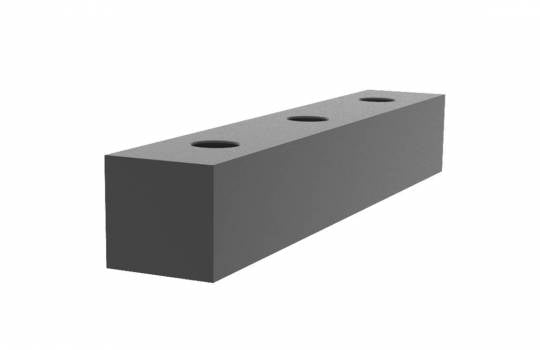
Rubber fender bars are elongated rubber elements designed to absorb impact and protect fixed marine structures and vessels. They act as a resilient buffer between hulls and hard surfaces to reduce abrasion and local stress on pontoons, docks, barges and boats. Rubber bars are used where continuous linear protection is required, providing a durable contact surface that deforms under load to dissipate energy. Contact our team for technical advice on material selection and compatibility with specific marine environments.
What are fender bars used for?
Fender bars are used to protect berthing structures and vessels by providing a protective barrier that prevents direct contact with hard surfaces. Typical applications include jetties, docks, pontoons, barges and small craft berths where linear cushioning and edge protection are needed. They help reduce structural damage, hull abrasion and point loads during mooring and berthing maneuvers. For application-specific guidance and recommendations on rubber bars, please contact our team for advice.
How are rubber fender bars installed?
Installation of rubber fender bars normally involves mounting the bars to a supporting substrate using mechanical fastenings, backing plates or continuous channels to ensure secure load transfer. Correct alignment, sufficient backing support and appropriate fixing spacing are important to achieve intended performance. Installation should follow engineering requirements and manufacturer guidance, with consideration for access, inspection and maintenance. For installation recommendations and to confirm suitable fixing methods for your structure, contact our team for advice.
How do rubber fender bars reduce impact?
Rubber fender bars reduce impact by deforming under load to absorb and dissipate kinetic energy, which lowers peak forces transmitted to structures and vessels. The linear geometry spreads contact over a larger area to reduce localized stress and minimize abrasion to hulls and decking. Proper selection of rubber compound and profile influences energy absorption and rebound characteristics. Regular inspection and correct specification are important to maintain performance; contact our team for guidance on selecting rubber bars for specific impact conditions.
Fender brochures
In our download section you will find the latest editions of our fender brochures. Please download our latest fender catalogue for more interesting product information