


Keyhole composite fenders Brochure
In our download section you will find the latest editions of our fender brochures.
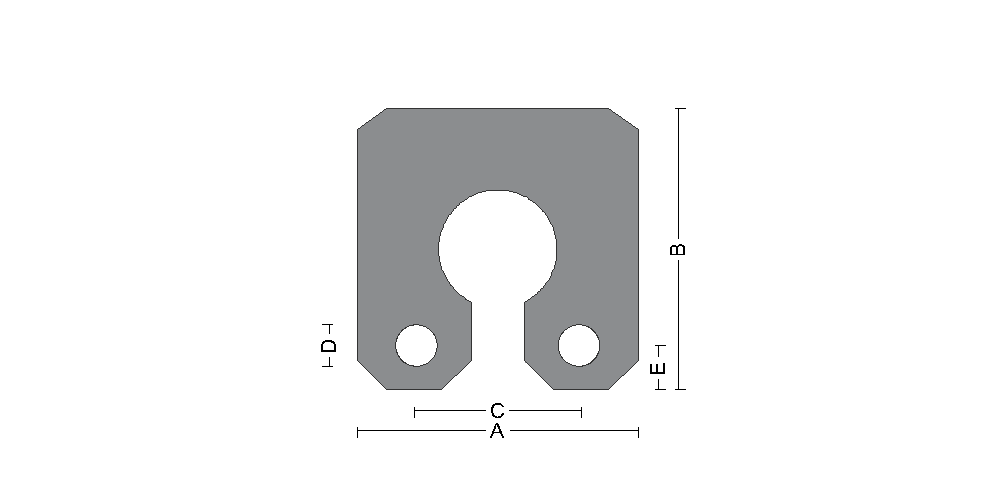
| Product Name | SKU | A (mm) | B (mm) | C (mm) | D (mm) | Weight (kg/m) | Max Length (mm) |
|---|---|---|---|---|---|---|---|
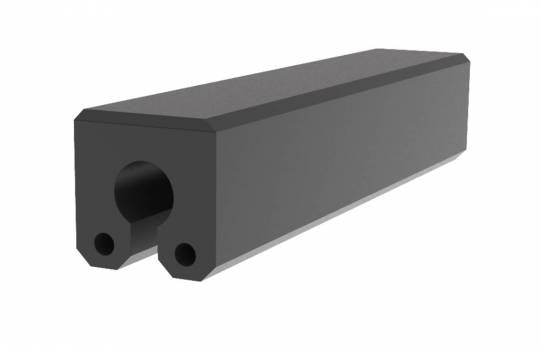
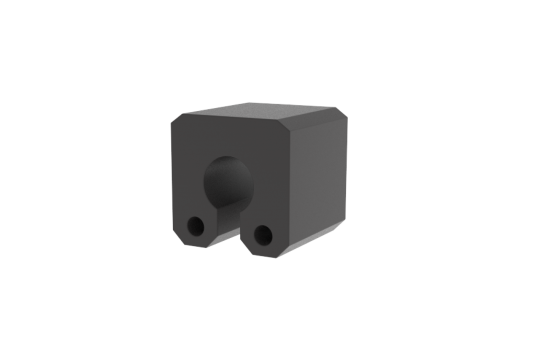
| Keyhole fender ribbed face 100x100mm | KEYR100100 | 100 | 100 | 70 | 16 | 8,0 | 2.000 |
| Keyhole fender ribbed face 200x200mm | KEYR200200 | 200 | 200 | 130 | 28 | 33,0 | 2.000 |
| Keyhole fender ribbed face 250x250mm | KEYR250250 | 250 | 250 | 150 | 33 | 54,0 | 2.000 |
| Keyhole fender ribbed face 300x300mm | KEYR300300 | 300 | 300 | 180 | 33 | 80,0 | 2.000 |
| Keyhole fender ribbed face 350x350mm | KEYR350350 | 350 | 350 | 210 | 33 | 114,0 | 2.000 |
Related tugboat fenders:
-

Fenders for Tugboats
FenderTec produces high-quality rubber fenders for workboats, tugboats, and marine applications. We...

Keyhole composite fenders information:
FAQ
What is a Keyhole fender?
A Keyhole fender is a type of marine fender designed to provide impact protection while managing lateral loads. These fenders are manufactured as composite units that combine elastic rubber elements with low-friction polymer surfaces to allow relative sliding under contact. The construction aims to limit shear forces during vessel-to-structure or vessel-to-vessel contact. Keyhole fenders are used where controlled sliding and energy absorption are required to protect hulls and quay structures.
What materials are Keyhole fenders made from?
Keyhole fenders are made from composite materials combining elastomeric rubber with ultra-high-molecular-weight polyethylene (UHMW-PE) or similar low-friction polymers. The rubber component provides elastic energy absorption and surface resilience, while the UHMW-PE offers a hard, low-friction contact face that reduces wear and sliding resistance. This material combination is selected to balance impact mitigation and controlled sliding under shear loads. Contact our team for technical advice on material selection for specific operational conditions.
What are Keyhole fenders used for?
Keyhole fenders are used to protect vessels and marine structures where lateral movement and rubbing occur, such as tugboat fender applications, pushing stern fenders, and berth protection. They are applied where reducing shear forces and enabling controlled sliding between contacting surfaces is important. Typical use cases include vessel manoeuvring, pushing operations, and berthing scenarios where both energy absorption and low-friction contact are required to limit damage to hulls and quay structures.
How do Keyhole fenders reduce shear forces?
Keyhole fenders reduce shear forces by combining an energy-absorbing rubber body with a low-friction UHMW-PE contact surface. The polymer face lowers friction during sliding contact, while the elastomeric core dissipates impact energy and accommodates deformation. Together these features limit peak lateral loads transmitted to the hull or structure. Actual shear reduction depends on installation, contact geometry, and operating conditions; consult our team for application-specific assessment and recommendations.
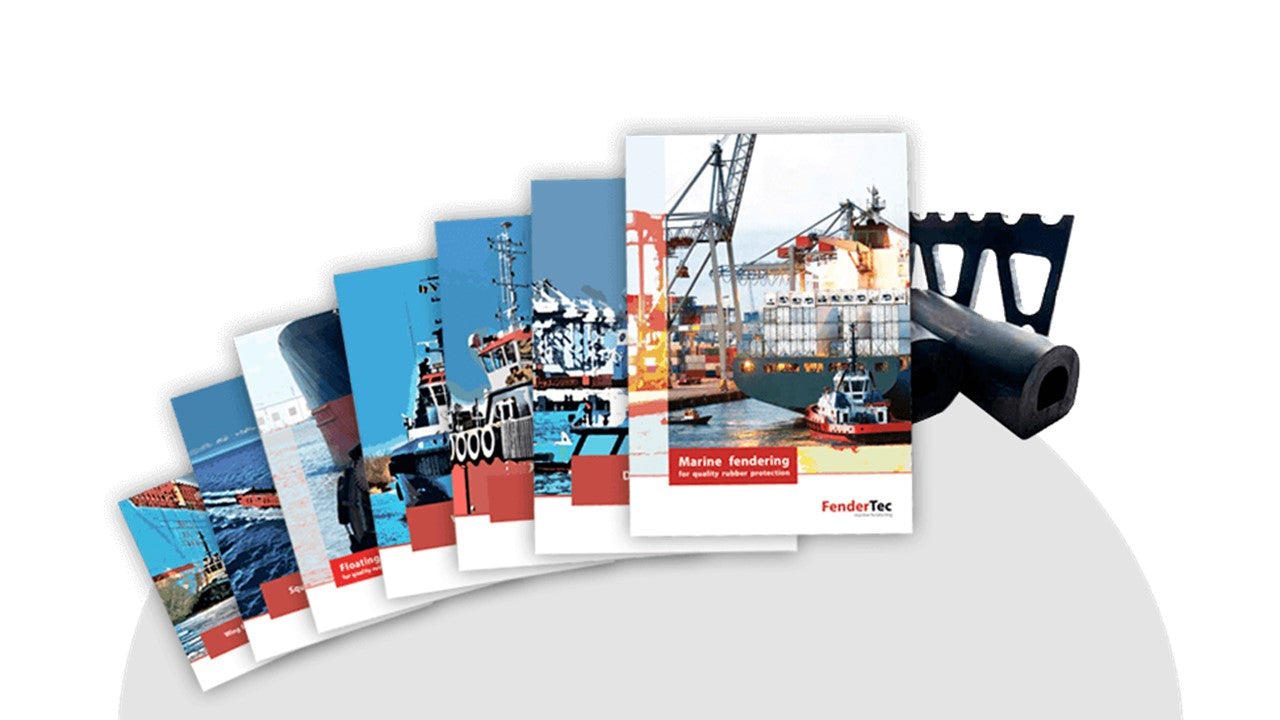
Fender brochures
In our download section you will find the latest editions of our fender brochures. Please download our latest fender catalogue for more interesting product information