


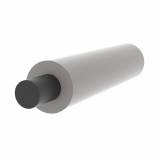

Rubber Cylindrical fenders Brochure
In our download section you will find the latest editions of our fender brochures.
| Product Name | SKU | A (mm) | B (mm) | Weight (kg/m) | Max Length (mm) |
|---|---|---|---|---|---|
| Cylindrical fender 100x050mm | CYL100050 | 100 | 50 | 7,2 | 6.000 |
| Cylindrical fender 150x075mm | CYL150075 | 150 | 75 | 16,3 | 6.000 |
| Cylindrical fender 200x100mm | CYL200100 | 200 | 100 | 29,0 | 6.000 |
| Cylindrical fender 250x125mm | CYL250125 | 250 | 125 | 45,3 | 6.000 |
| Cylindrical fender 300x150mm | CYL300150 | 300 | 150 | 65,2 | 10.000 |
| Cylindrical fender 380x190mm | CYL380190 | 380 | 190 | 105,0 | 10.000 |
| Cylindrical fender 400x200mm | CYL400200 | 400 | 200 | 116,0 | 10.000 |
| Cylindrical fender 450x225mm | CYL450225 | 450 | 225 | 147,0 | 8.000 |
| Cylindrical fender 500x250mm | CYL500250 | 500 | 250 | 181,0 | 8.000 |
| Cylindrical fender 600x300mm | CYL600300 | 600 | 300 | 255,0 | 10.000 |
| Cylindrical fender 800x400mm | CYL800400 | 800 | 400 | 453,0 | 11.500 |
| Cylindrical fender 900x450mm | CYL900450 | 900 | 450 | 597,0 | 10.000 |
| Cylindrical fender 1000x500mm | CYL1000500 | 1000 | 500 | 707,0 | 12.500 |
| Cylindrical fender 1200x600mm | CYL1200600 | 1200 | 600 | 1.018,0 | 8.000 |
| Cylindrical fender 1400x700mm | CYL1400700 | 1400 | 700 | 1.386,0 | 2.500 |
| Cylindrical fender 1400x800mm | CYL1400800 | 1400 | 800 | 1.245,0 | 2.400 |
| Cylindrical fender 1500x750mm | CYL1500750 | 1500 | 750 | 1.591,0 | 2.500 |
| Cylindrical fender 1600x800mm | CYL1600800 | 1600 | 800 | 1.810,0 | 2.400 |
| Cylindrical fender 1800x900mm | CYL1800900 | 1800 | 900 | 2.273,0 | 2.300 |
| Cylindrical fender 2000x1000mm | CYL20001000 | 2000 | 1000 | 2.414,0 | 2.200 |
| Cylindrical fender 2000x1200mm | CYL20001200 | 2000 | 1200 | 2.414,0 | 2.000 |
Typical applications:
-

Quay fenders
What are quay fenders? Quay fenders are marine protection systems installed along...
-

Fenders for Harbours and ports
Fenders for harbours and ports are marine fendering systems designed to protect...
-

Fenders for Pontoons and marinas
FenderTec specializes in supplying powerful and high-quality pontoon fenders and / or...


Rubber Cylindrical fenders information:
FAQ
What are cylindrical fenders (donut fenders)?
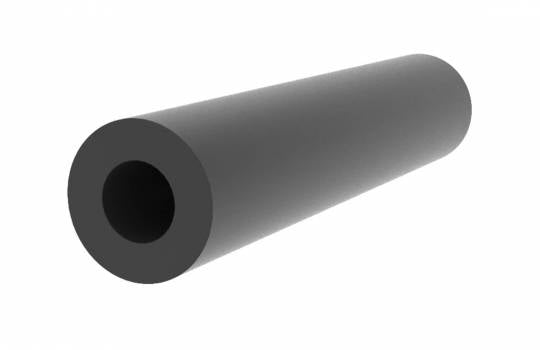
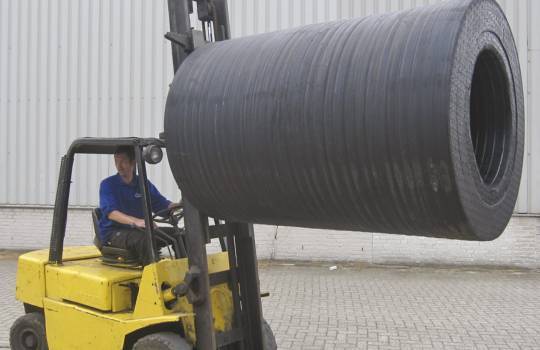
Cylindrical fenders, often called donut fenders, are rubber fender elements with a circular cross-section used in marine settings. They are designed to absorb and distribute impact energy between a vessel and a berth, quay, pontoon or other structure. As elastomeric components, they provide a resilient contact surface that reduces shock and abrasion to hulls and fixed structures. The term donut fender is commonly used to describe the same basic cylindrical profile.
What are cylindrical fenders used for?
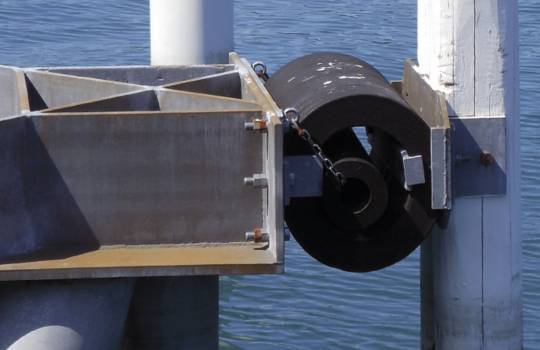
Cylindrical fenders are used to protect vessels and marine infrastructure during berthing, mooring and vessel-to-structure contact. They provide a cushioning interface that reduces impact loads, prevents hull damage and limits wear on piers, pontoons and pilings. Typical uses include ship-to-berth operations, small craft docking points and any application where a resilient, rounded fender profile is required to absorb lateral and compressive forces.
How do cylindrical fenders differ from other fender types?
The cylindrical profile gives these fenders a uniform contact surface and predictable deformation characteristics compared with flat or panel-style fenders. This shape can provide even load distribution and simple mounting options for both fixed and floating installations. Unlike some complex fender systems, cylindrical fenders are a straightforward solution where a rounded, resilient buffer is required. Selection should consider contact geometry, energy absorption needs and mounting method.
How should cylindrical fenders be maintained?
Maintenance for cylindrical rubber fenders typically includes regular visual inspection for surface damage, checking mounting hardware and attachments for corrosion or wear, and cleaning to remove debris, biofouling or contaminants. Damaged or excessively worn fenders should be repaired or replaced to maintain protective performance. For specific maintenance procedures, compatibility with cleaning agents and recommendations for inspection intervals, contact our team for technical advice.

Fender brochures
In our download section you will find the latest editions of our fender brochures. Please download our latest fender catalogue for more interesting product information