


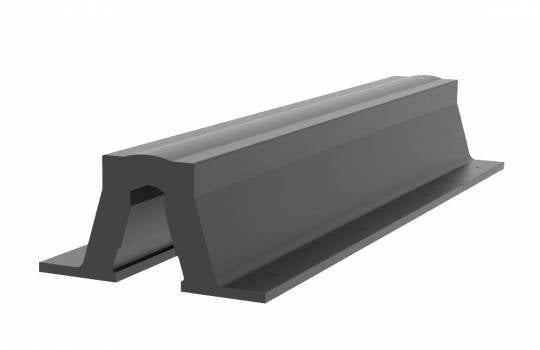
Arch fender Brochure
In our download section you will find the latest editions of our fender brochures.
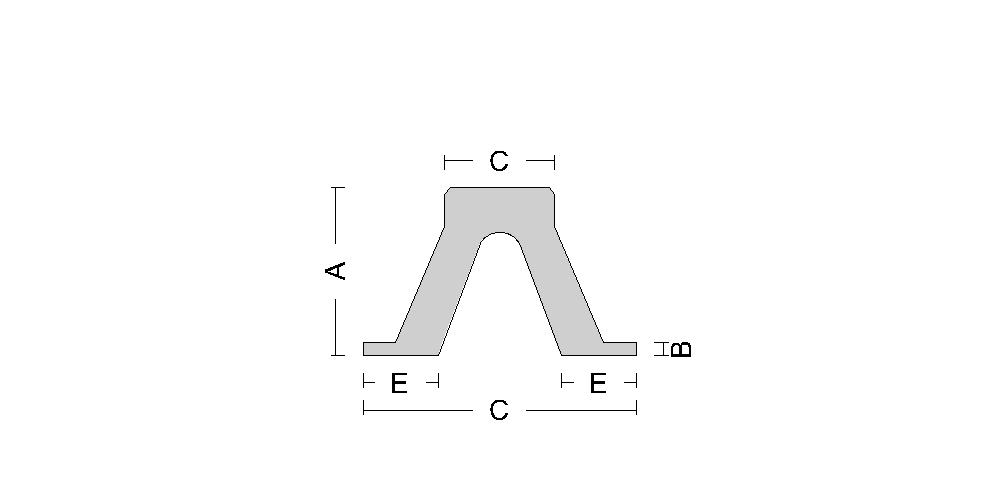
| A (mm) | B (mm) | C (mm) | D (mm) | E (mm) | F (mm) | L (mm) | Top (mm) UHMW-PE | Weight (kg/m) |
|---|---|---|---|---|---|---|---|---|
| 150 | 16-20 | 326 | 98 | 108 | 500 | 3000 | 30 | 28 |
| 200 | 18-25 | 422 | 130 | 142 | 500 | 3000 | 30 | 48 |
| 250 | 20-30 | 500 | 163 | 164 | 500 | 3500 | 30 | 69 |
| 300 | 25-32 | 595 | 195 | 194 | 500 | 3500 | 40 | 107 |
| 400 | 25-32 | 808 | 260 | 266 | 500 | 3500 | 40 | 185 |
| 500 | 25-32 | 981 | 325 | 318 | 500 | 3500 | 50 | 278 |
| 600 | 28-40 | 1160 | 390 | 373 | 500 | 3000 | 50 | 411 |
| 800 | 41-50 | 1550 | 520 | 499 | 500 | 3000 | 60 | 770 |
| 1000 | 50-62 | 1850 | 650 | 580 | 500 | 3000 | 60 | 1289 |
Typical applications:
-

Fenders for Harbours and ports
Fenders for harbours and ports are marine fendering systems designed to protect...

Arch fender information:
FAQ
What are arch fenders?
An arch fender is a type of marine fender designed to absorb and redistribute berthing energy between a vessel and a berth. Typically formed from durable rubber compounds, arch fenders have a simple arched profile that provides a broad, resilient contact surface. They are classified as a marine fender system used at quays, piers and pontoons to reduce impact forces and protect both hulls and berth structures during mooring operations.
What are arch fenders used for?
Arch fenders are used for vessel berthing protection where consistent energy absorption and a low-maintenance solution are required. Common applications include quays, piers, ferry terminals, workboats and general cargo berths. They serve to protect vessel hulls and berth infrastructure by cushioning impacts, limiting contact pressure and accommodating small relative movements between vessel and structure. They are suitable for many berth types and configurations where a reliable, rugged fender is needed.
How do arch fenders work?
Arch fenders work by deforming under load to absorb kinetic energy from a berthing vessel and redistribute contact forces over a larger area. The arch profile allows controlled compression and rebound, reducing peak pressures on hulls and structural elements. The material and shape combine to provide predictable load-deflection behavior. This functional principle makes arch fenders effective for repeated berthing cycles and helps maintain berth protection with straightforward mechanical behavior.
How are arch fenders installed and maintained?
Installation typically involves fixing the fender to a quay or structure using mounting hardware suitable for the substrate and operational loads. Regular maintenance consists of visual inspections for wear, damage or hardware corrosion, cleaning to remove debris, and replacing worn components as required. Maintenance intervals depend on operating conditions and usage. For specific mounting recommendations, material selection and inspection schedules, contact our technical team for advice tailored to your berth and operational requirements.
Fender brochures
In our download section you will find the latest editions of our fender brochures. Please download our latest fender catalogue for more interesting product information