


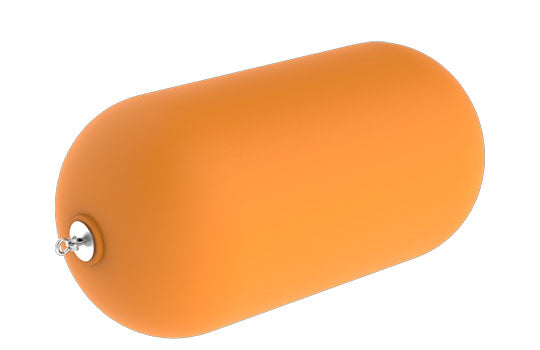

Foam filled fenders PU Brochure
In our download section you will find the latest editions of our fender brochures.
| Product Name | Body Diameter (mm) | Body Length (mm) | Approx. Weight (kg) |
|---|---|---|---|
| Foam Filled PU Fender 400x1000 | 400 | 1000 | 45 |
| Foam Filled PU Fender 500x1000 | 500 | 1000 | 50 |
| Foam Filled PU Fender 600x1000 | 600 | 1000 | 55 |
| Foam Filled PU Fender 700x1500 | 700 | 1500 | 79 |
| Foam Filled PU Fender 800x1800 | 800 | 1800 | 112 |
| Foam Filled PU Fender 1000x1500 | 1000 | 1500 | 110 |
| Foam Filled PU Fender 1000x2000 | 1000 | 2000 | 195 |
| Foam Filled PU Fender 1200x2000 | 1200 | 2000 | 245 |
| Foam Filled PU Fender 1500x3000 | 1500 | 3000 | 495 |
Related product groups
-
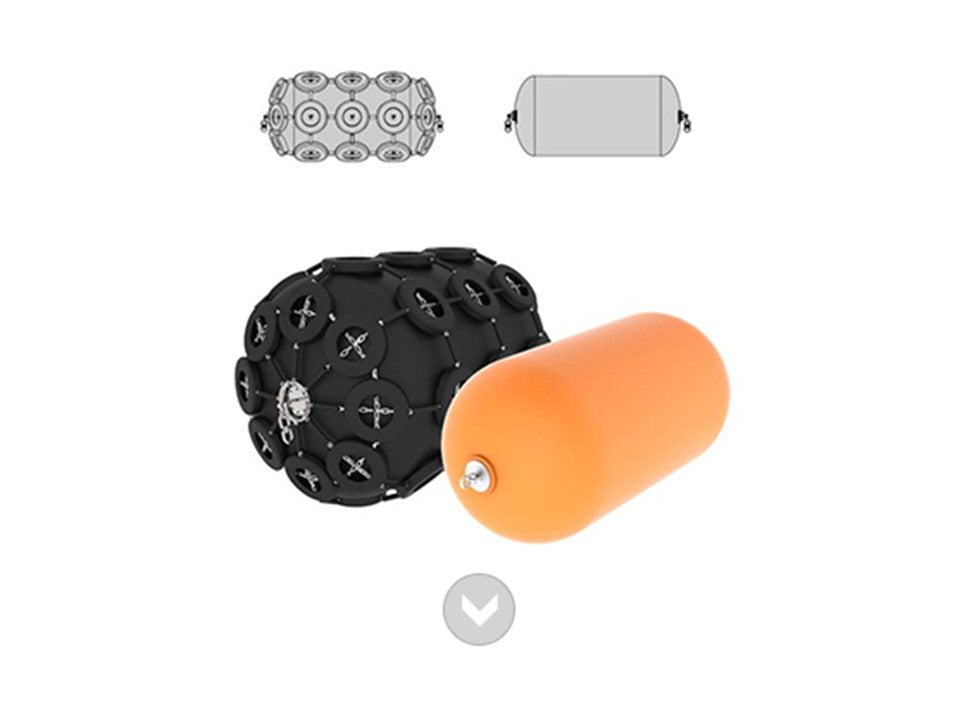
Yokohama type pneumatic fenders
What are Yokohama fenders? Yokohama fenders are pneumatic marine fenders designed to...
Foam filled fenders PU information:
FAQ
What are PU foam filled fenders?
PU foam filled fenders are marine fenders with a tough polyurethane outer skin encapsulating a closed-cell foam core. This construction provides buoyancy and energy absorption during vessel contact while maintaining structural integrity. These floating foam fenders resist water ingress and abrasion, and are designed to deform under load to dissipate impact forces. Their materials and design make them suitable for use where continuous flotation and impact resilience are required.
What are floating foam fenders used for?
Floating foam fenders are used to protect vessels, pontoons, and berthing structures from contact damage during mooring, berthing, and vessel handling operations. They serve as a resilient buffer between hulls and fixed or floating infrastructure, reducing transmitted forces and preventing abrasion. Applications include ship-to-ship transfers, tugboat operations, and protection of small craft and workboats. Selection should be based on operational conditions and expected impact characteristics.
Are PU foam fenders low-maintenance?
PU foam fenders are generally low-maintenance due to their robust polyurethane skin and inherent flotation from the foam core. Routine maintenance typically involves periodic visual inspections for surface damage, cleaning to remove debris and contaminants, and checking the condition of mounting hardware. Significant damage should be evaluated and repaired by qualified personnel. For specific maintenance schedules and procedures tailored to operational conditions, you can contact our team for technical advice.
How should floating foam fenders be inspected?
Inspect floating foam fenders regularly with a focus on the outer skin, seams, and mounting attachments. Look for cuts, abrasion, delamination, deformation, and signs of water ingress. Verify that fixing points, shackles, and ropes are intact and properly secured. Clean surfaces to remove marine growth and contaminants that could accelerate wear. Document findings and address any damage promptly with appropriate repair methods. For detailed inspection protocols relevant to your installation, contact our team for guidance.

Fender brochures
In our download section you will find the latest editions of our fender brochures. Please download our latest fender catalogue for more interesting product information