


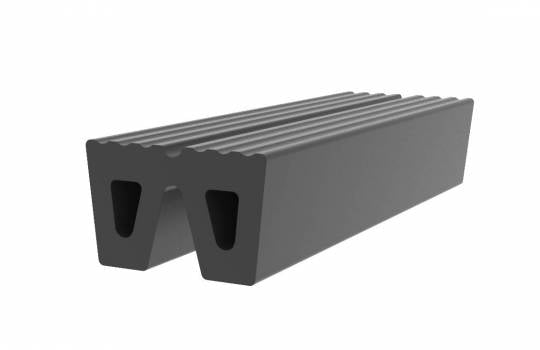


W fenders Brochure
In our download section you will find the latest editions of our fender brochures.
| SKU | A (mm) | B (mm) | C (mm) | D (mm) | Weight (kg/m) | Max length (mm) |
|---|---|---|---|---|---|---|
| W320200 | 320 | 200 | 100 | 180 | 51.0 | 2000 |
| W400250 | 400 | 250 | 110 | 220 | 81.0 | 2000 |
| W480300 | 480 | 300 | 135 | 265 | 120.0 | 2000 |
| W500360 | 500 | 360 | 125 | 260 | 156.0 | 2000 |
| W500400 | 500 | 400 | 170 | 295 | 165.0 | 2000 |
| W500450 | 500 | 450 | 90 | 250 | 180.0 | 2000 |
Related tugboat fenders:
-

Fenders for Tugboats
FenderTec produces high-quality rubber fenders for workboats, tugboats, and marine applications. We...

W fenders information:
FAQ
What are W fenders?
W fenders are a type of stern fender designed to absorb impact and protect vessel hulls during berthing and alongside operations. They combine a geometry that promotes energy absorption with rubber material properties that offer efficient grip and low contact pressure. W fenders are intended for use where controlled load distribution and reduced hull stress are required, including applications on tugs and barges performing pushing or stern contact duties.
What are W fenders used for?
W fenders are used as stern fenders to protect vessel hulls and structures during contact with other vessels, piers, or pontoons. They are common in tugboat operations and pushing stern fenders configurations where reliable energy absorption and secure grip are needed to reduce slippage and minimize damage. Typical uses include berthing, towing interfaces, and push-off scenarios where controlled load transfer and low surface pressure are important.
How do W fenders provide energy absorption?
W fenders provide energy absorption through a combination of rubber material compression and the fender geometry, which distributes impact forces across a larger contact area. The design reduces peak contact pressure, thereby lowering the risk of localized damage to hulls. Efficient grip characteristics help maintain contact stability and reduce relative movement. This mechanical behavior is inherent to the fender construction and material properties, and it supports consistent performance in repetitive docking and pushing operations.
How are W fenders installed on tugboat sterns?
W fenders are typically mounted to the vessel or fendering system using appropriate fastening points and hardware compatible with the vessel structure. Installation practices focus on secure attachment, correct alignment for intended contact zones, and provisions for inspection and maintenance. Specific mounting methods vary by vessel and operational requirement; for tailored guidance on installation and selection for tugboat or pushing stern fender applications, contact our team for technical advice.
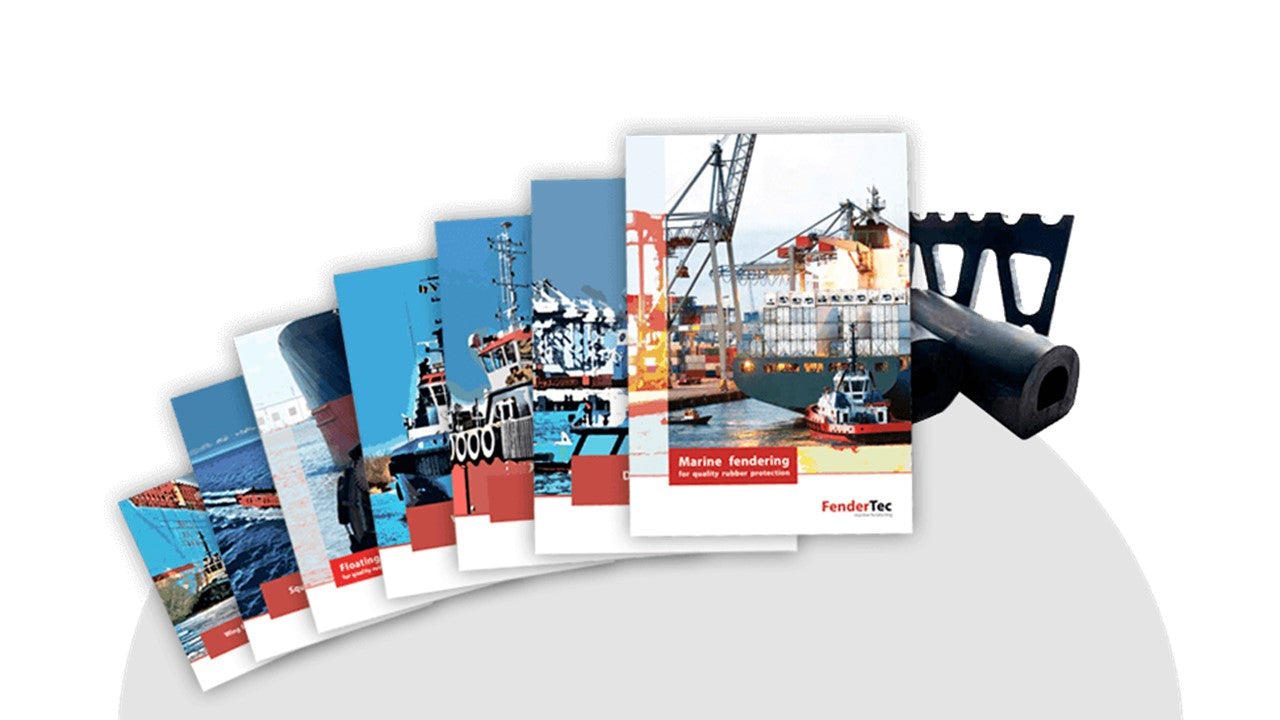
Fender brochures
In our download section you will find the latest editions of our fender brochures. Please download our latest fender catalogue for more interesting product information