


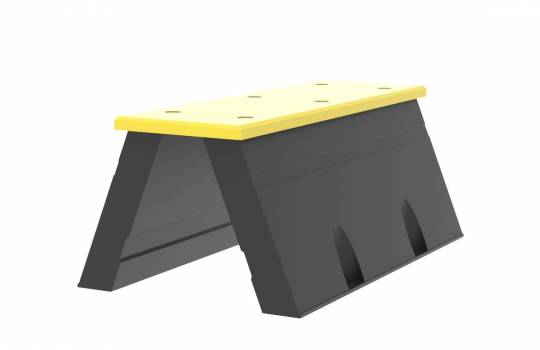
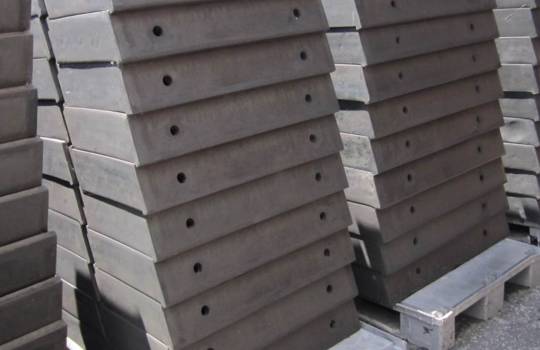
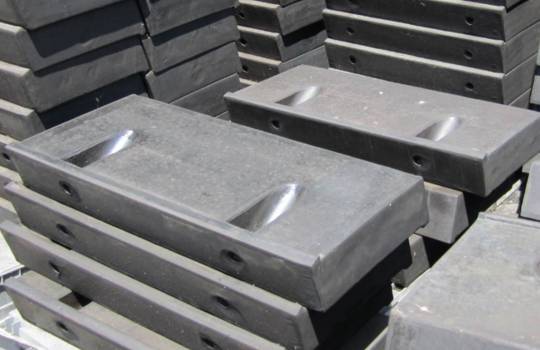

Element fenders Brochure
In our download section you will find the latest editions of our fender brochures.
| Product Name | B (mm) | C (mm) | D (mm) | E (mm) | L (mm) | Weight (kg/m) |
|---|---|---|---|---|---|---|
| Element fender 300x94mm | 94 | 300 | 47 | 93 | 600 - 1500 | 27 - 68 |
| Element fender 400x125mm | 125 | 500 | 63 | 124 | 750 - 3000 | 50 - 198 |
| Element fender 500x158mm | 158 | 500 | 87 | 142 | 750 - 3000 | 84 - 334 |
| Element fender 550x172mm | 172 | 500 | 87 | 170 | 750 - 1500 | 100 - 200 |
| Element fender 600x188mm | 188 | 500 | 87 | 199 | 750 - 1500 | 115 - 230 |
| Element fender 750x235mm | 235 | 500 | 118 | 230 | 750 - 1500 | 180 - 359 |
| Element fender 800x250mm | 250 | 500 | 129 | 240 | 800 - 2000 | 214 - 536 |
| Element fender 1000x322mm | 322 | 500 | 162 | 310 | 800 - 2000 | 346 - 864 |
| Element fender 1250x401mm | 401 | 500 | 202 | 388 | 800 - 2000 | 511 - 1278 |
Typical applications:
-

Fenders for Harbours and ports
Fenders for harbours and ports are marine fendering systems designed to protect...

Element fenders information:
FAQ
What are rubber element fenders?
Rubber element fenders are modular marine fender components designed to absorb energy and reduce impact forces between a vessel and a berth, quay or other structures. They consist of rubber blocks or elements arranged on a supporting structure to provide controlled deflection and energy dissipation. These fenders are used where a flexible, replaceable contact surface is required and where the fender system must accommodate repeated berthing operations and varying vessel hull profiles.
What are rubber element fenders used for?
Rubber element fenders are used to protect vessels and quay structures during berthing and mooring operations. Typical applications include ship-to-quay berthing, barge and pontoon protection, transfer berths and offshore platforms. They are selected where impact energy absorption, abrasion resistance and modular replacement of worn elements are important. Use cases depend on vessel type, berthing frequency and the structural characteristics of the berth.
How are rubber element fenders installed and maintained?
Installation normally involves fastening the rubber elements to a supporting structure such as a steel frame or quay face, using mechanical fixings and mounting hardware suited to the site. Maintenance focuses on regular inspections for rubber degradation, wear, displacement and corrosion of metal fixings. Routine cleaning, timely replacement of damaged elements and checks of mounting integrity help maintain performance. For site-specific installation and maintenance guidance, contact our technical team for advice.
How do I choose the right rubber element fender for my application?
Selection should consider vessel size and hull shape, berthing energy and frequency, quay or piling structure, gap and standoff requirements, and environmental conditions such as tides and currents. Compatibility with existing fender systems, ease of element replacement and applicable safety or regulatory standards are also relevant. A technical assessment of berthing scenarios and structural constraints is recommended; contact our team for application-specific guidance and recommendations.
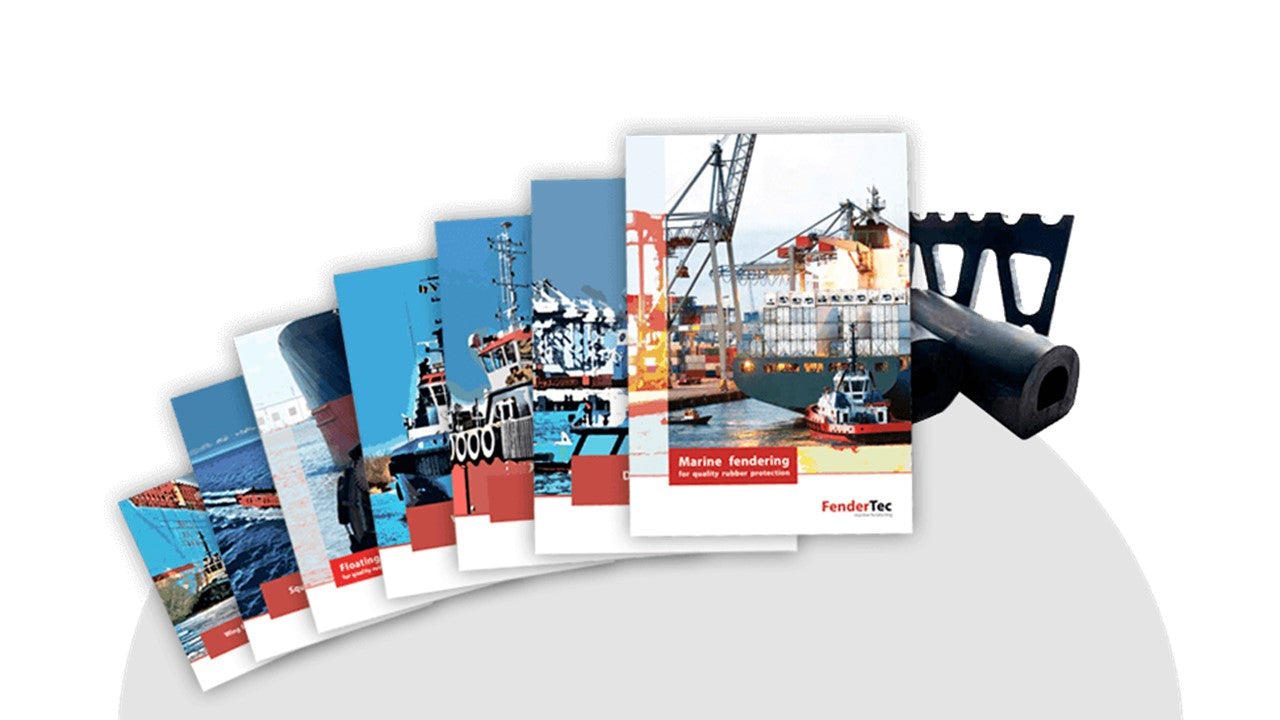
Fender brochures
In our download section you will find the latest editions of our fender brochures. Please download our latest fender catalogue for more interesting product information